Breakfast anchors
Oats, eggs, bread you enjoy, fruit that fits the season, and milk or fortified alternatives your household tolerates. Rotate toppings instead of buying new bases every week.
Nourish
This page is a deeper look at how we talk about plates, snacks, and groceries—without turning meals into a scoreboard. “Nourish” here means assembling food that supports your day: enough variety to feel satisfying, enough structure to feel doable, and language you can share with the people you eat.
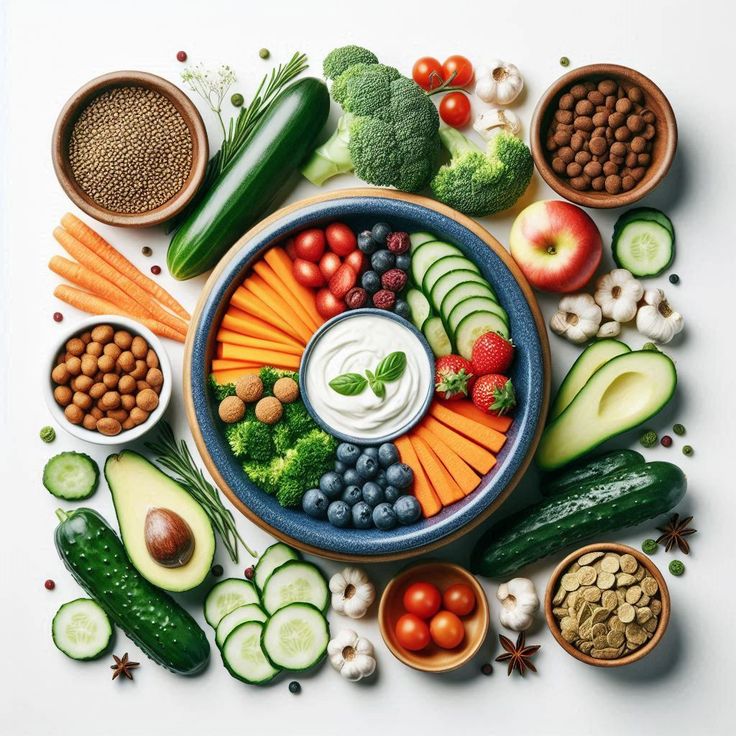
Picture roughly half the plate for vegetables and fruit, a quarter for grains or starchy sides, and a quarter for protein—then flex the ratios when appetite or culture calls for it. The point is not perfection on every plate; it is a visual shorthand you can repeat in cafeterias, at home, or when ordering takeout.
When you batch-cook, the template still helps: you might combine roasted vegetables, a pot of grains, and a simple protein on Sunday, then remix into bowls, wraps, or soups through the week. That way “variety” shows up as texture and colour, not as ten new recipes every Monday.
A workable pantry is not a maximalist dream—it is a short list of ingredients you will actually finish. Think canned beans, quick oats, olive oil, plain yogurt, frozen vegetables, and one or two flavour builders you love. When the list stays short, waste tends to drop and creativity rises.
Oats, eggs, bread you enjoy, fruit that fits the season, and milk or fortified alternatives your household tolerates. Rotate toppings instead of buying new bases every week.
Leftovers repurposed into grain bowls, sandwiches with extra vegetables, or soups that use the same broth twice with different add-ins.
One sheet-pan protein, one tray of vegetables, and a starch that cooks in the same window when possible—fewer dishes, clearer timing.
Pair carbohydrates with protein or fat if you like how that combination fits your day—examples include apple with nuts, crackers with cheese, or yogurt with seeds. Individual responses vary; this is general education, not personalized nutrition therapy.
Fluids matter for comfort and focus, but the “right” amount varies with activity and weather. We suggest pairing habits you already have—like a glass of water with coffee or a refillable bottle visible on your desk—rather than rigid litre counts.
If plain water feels dull, herbal tea or broth can count toward the same goal. The aim is steady, not punitive.
Start with serving size, then scan sodium, fibre, and added sugars when comparing similar products. If two items are close, pick the one that fits your budget and taste—you do not need a spreadsheet for every aisle.
Restaurants can be social glue. We talk about splitting plates, adding vegetables where they fit, and choosing satisfying options without moralizing. If allergies or intolerances are in play, those conversations belong with qualified clinicians—our role stays general.
If eating feels stressful, disordered, or tied to sharp physical symptoms, a registered clinician may be the right next step. We stay in the lane of everyday education and general information.
Notice whether changes help you feel more stable—not whether they look impressive online.
When you contact us, mention budget, time, and who you cook for so suggestions stay grounded.
Schedules shift; Adaptation covers how we adjust without scrapping the whole plan.
Write to us with a snapshot of your week—we reply with a short list of options ranked by effort.
Contact Ghefryonquobrynn